
Open WebUI
Your self-hosted server
The full feature set: chats, folders, notes, channels, workspace, server-side tools, web search, and image generation.
Native iOS and Android. Chats stay on your device.
Open WebUIOllamaOpenRouterHermes
App Store and Play reviews, forum threads, posts on X, and notes people leave on Buy Me a Coffee.
Much prefer this to creating a web app shortcut.
The UI is far superior to what OpenWebUI has as a PWA.
Conduit is amazing... Well worth the price.
I can have a mobile experience as robust as anything I get from Anthropic.
Conduit is the primary native Android client for OpenWebUI.
a great and easy companion app for OWUI
really good UI and no issues with connecting to the OWUI server!
this app is just plain perfect well done.
love the implementation thus far!
UI is on par with ChatGPT app. Great app, dev is quick to fix bugs.
really polished and impressive!
It brings OWUI to the level of ChatGPT/Claude.
Thanks — it's just the app I thought should exist.
Served to my phone with tailscale… app on my phone via Conduit. Local models are absolutely viable now!
This was definitely a missing piece of the local hosting puzzle, thank you!
One of the few with a functional iOS Share Sheet. Kudos to you!
What an excellent app, thank you for your contribution to making it easier to detach from tech giants.
Conduit connecting to my vLLM-studio via Open WebUI.
Great job! This completes the self-hosted AI setup.
I love the app. It is so well made. Greetings from another dev here!
Thank you for creating this interface. I'm not a computer person and it is easy for my independent AI model on my home system to be accessed via my phone remotely.
Super app. I use this with my self-hosted AI services and it is solid.
Amazing work with Conduit, congrats on that neat, clean and responsive piece of art.
Good work you're doing plugging a genuine gap.
Nice app bro, streaming output with my Hermes agent is looking so good.
Thick apps are underrated, thank you!
Much prefer this to creating a web app shortcut.
This was definitely a missing piece of the local hosting puzzle, thank you!
I can have a mobile experience as robust as anything I get from Anthropic.
Conduit connecting to my vLLM-studio via Open WebUI.
really good UI and no issues with connecting to the OWUI server!
Thank you for creating this interface. I'm not a computer person and it is easy for my independent AI model on my home system to be accessed via my phone remotely.
UI is on par with ChatGPT app. Great app, dev is quick to fix bugs.
Good work you're doing plugging a genuine gap.
Thanks — it's just the app I thought should exist.
Served to my phone with tailscale… app on my phone via Conduit. Local models are absolutely viable now!
Conduit is amazing... Well worth the price.
What an excellent app, thank you for your contribution to making it easier to detach from tech giants.
a great and easy companion app for OWUI
I love the app. It is so well made. Greetings from another dev here!
love the implementation thus far!
Amazing work with Conduit, congrats on that neat, clean and responsive piece of art.
It brings OWUI to the level of ChatGPT/Claude.
Thick apps are underrated, thank you!
The UI is far superior to what OpenWebUI has as a PWA.
One of the few with a functional iOS Share Sheet. Kudos to you!
Conduit is the primary native Android client for OpenWebUI.
Great job! This completes the self-hosted AI setup.
this app is just plain perfect well done.
Super app. I use this with my self-hosted AI services and it is solid.
really polished and impressive!
Nice app bro, streaming output with my Hermes agent is looking so good.
On first launch Conduit asks how you want to connect. Pick one, add the others later, and skip any sign-in you don't need.
Your self-hosted server
The full feature set: chats, folders, notes, channels, workspace, server-side tools, web search, and image generation.
OpenAI-compatible, Ollama, OpenRouter
Talk to a provider or a model running on your own machine. Bring an API key or skip it entirely. No Open WebUI account required.
Your self-hosted agent
Tool calls stream in as they run, and sensitive steps wait for your approval. Scheduled jobs keep going after you lock the phone.
A live reply that keeps its place. Login that matches your reverse proxy. Notes and tools as real screens.
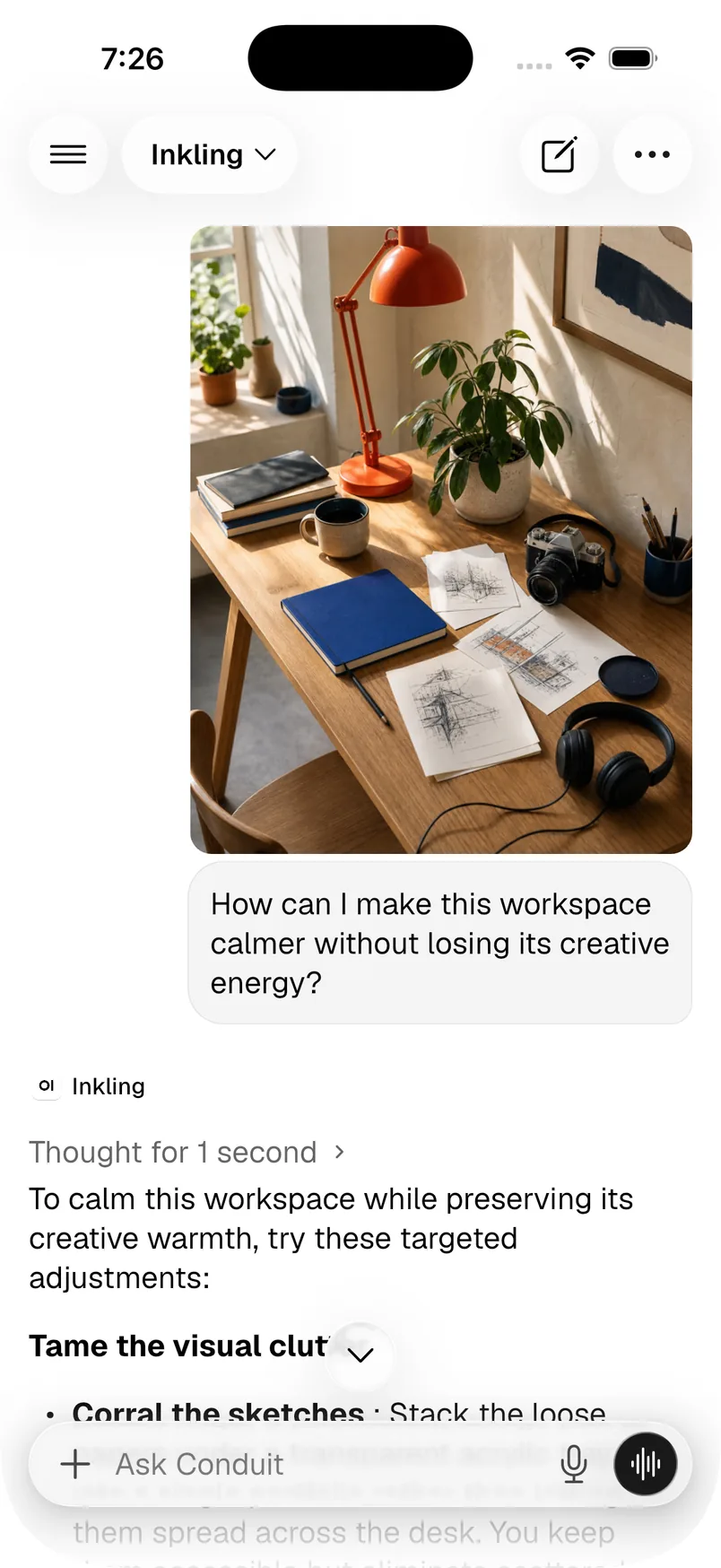
Tokens stream over a WebSocket, so replies start immediately and long sessions stay connected. The transcript stays put as the response grows. Long chats load without stalling.

Password, LDAP, JWT, custom headers, SSO, OAuth, reverse-proxy cookies. The methods your server already has.
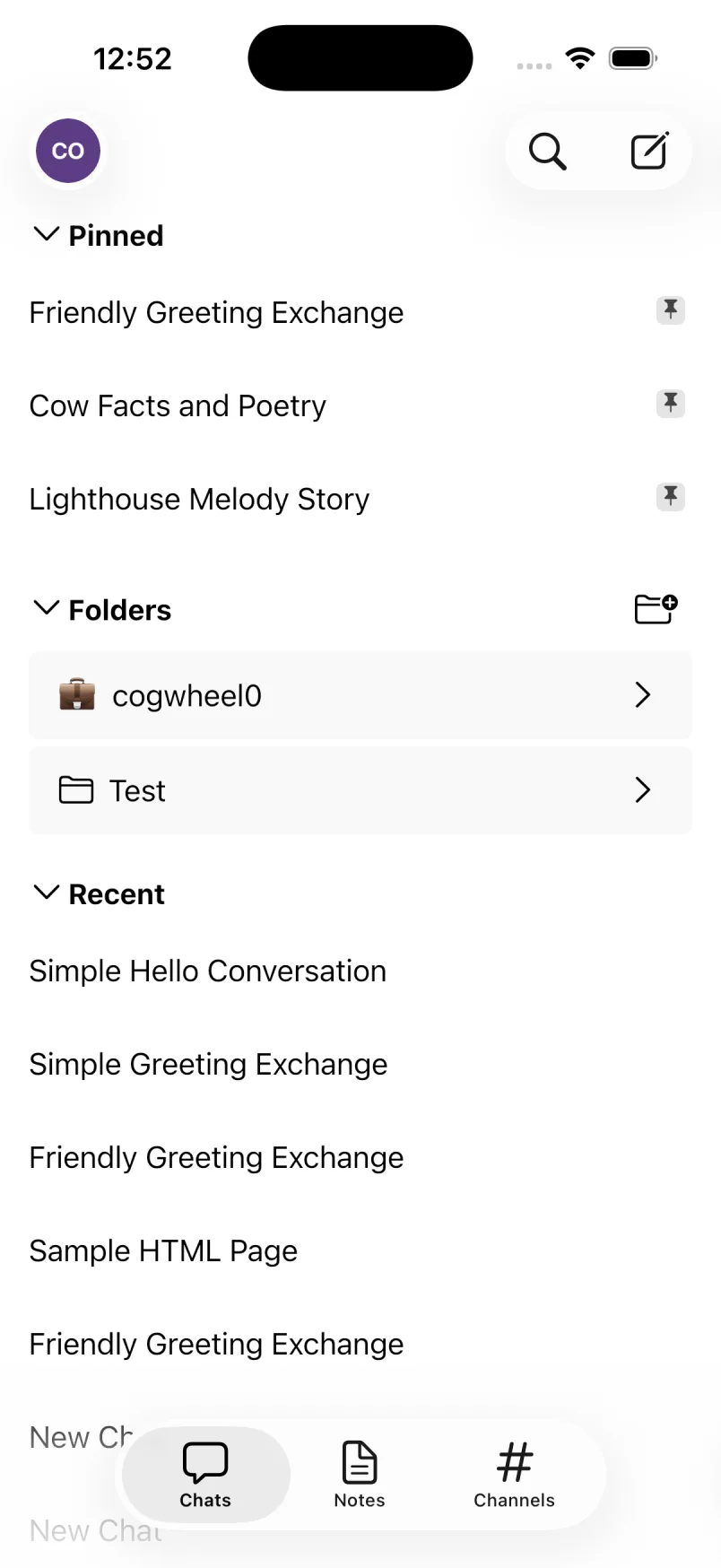
Models, knowledge, prompts, tools, and skills each get a native screen. Notes pick their own titles, channels have threads, and the share sheet puts text, links, and images into a prompt.
A live reply that keeps its place. Login that matches your reverse proxy. Notes and tools as real screens.
Tokens stream over a WebSocket, so replies start immediately and long sessions stay connected. The transcript stays put as the response grows. Long chats load without stalling.
Password, LDAP, JWT, custom headers, SSO, OAuth, reverse-proxy cookies. The methods your server already has.
Models, knowledge, prompts, tools, and skills each get a native screen. Notes pick their own titles, channels have threads, and the share sheet puts text, links, and images into a prompt.
Widgets, share sheet, voice, local drafts, Material or Cupertino. The parts a PWA skips.
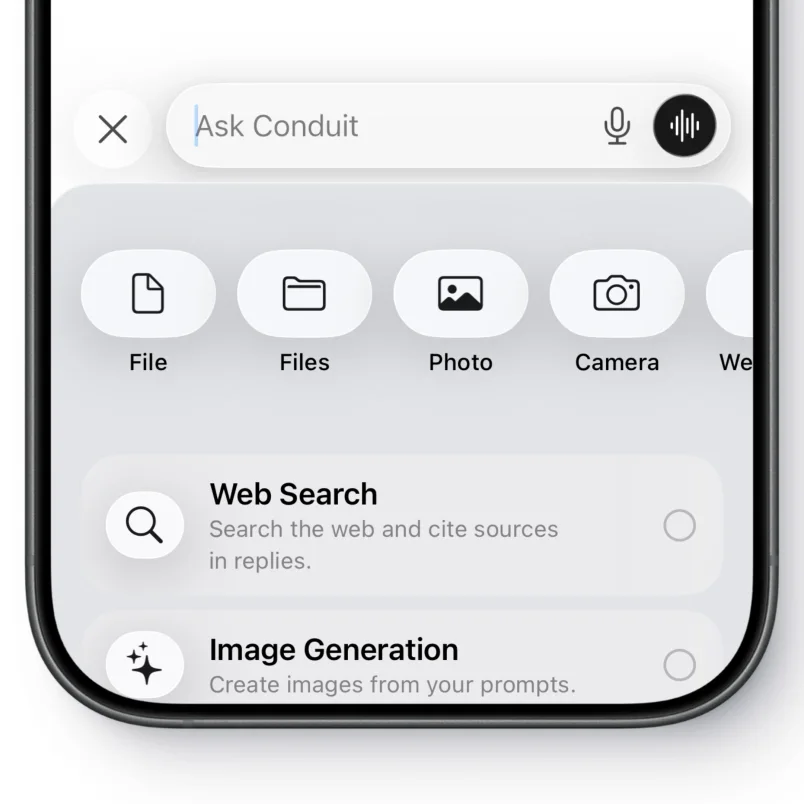
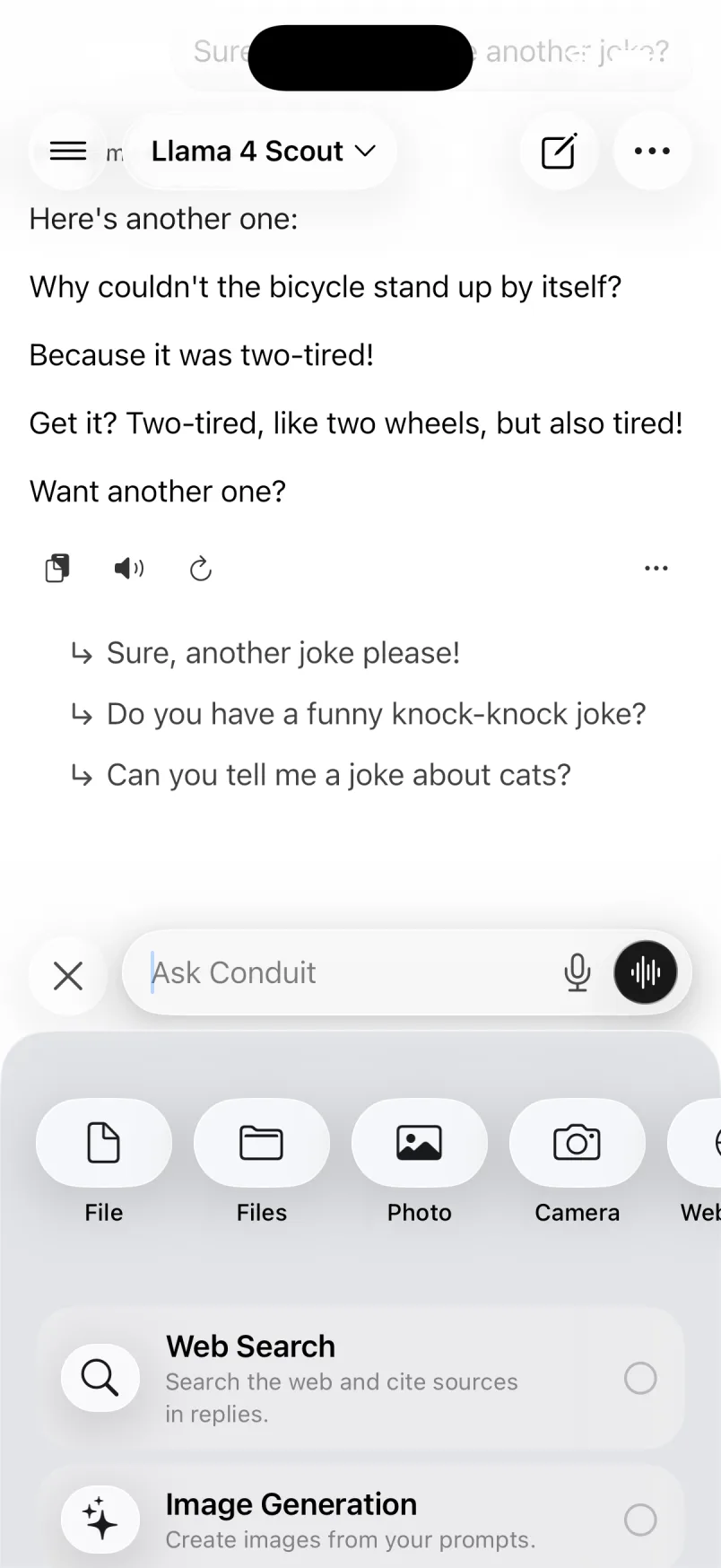
Multimodal prompts with re-attachable server files.
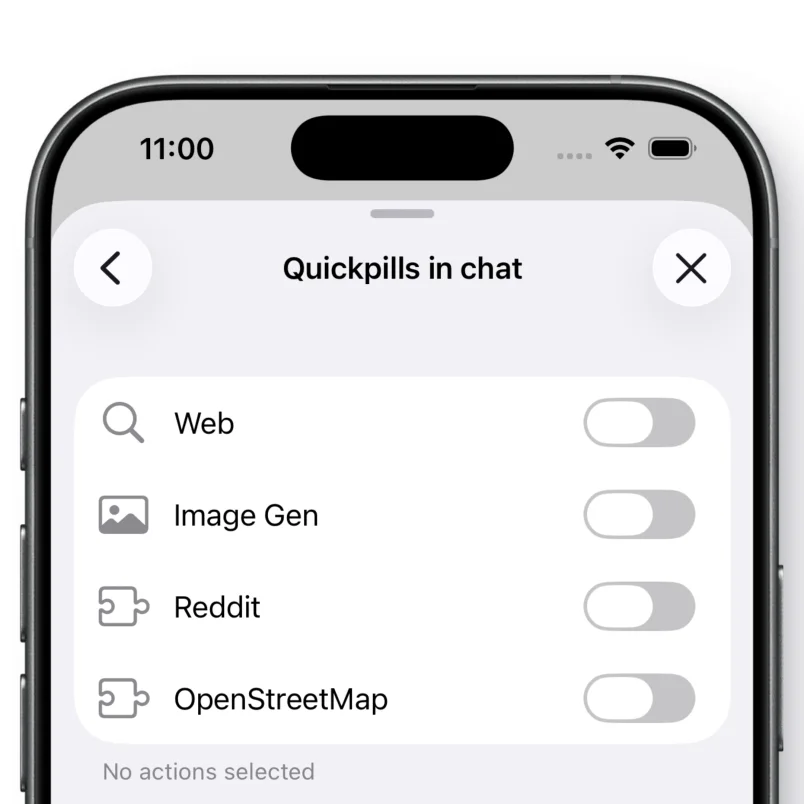
Tool calls, results, and reasoning, shown inline.
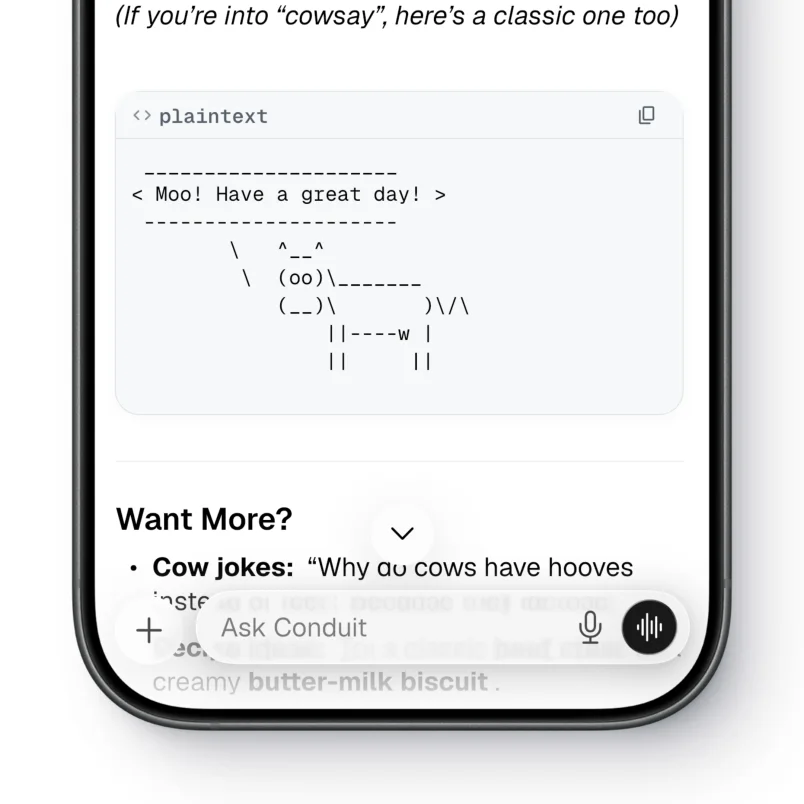
Code, math, diagrams, citations, reasoning, and tool calls, rendered natively.
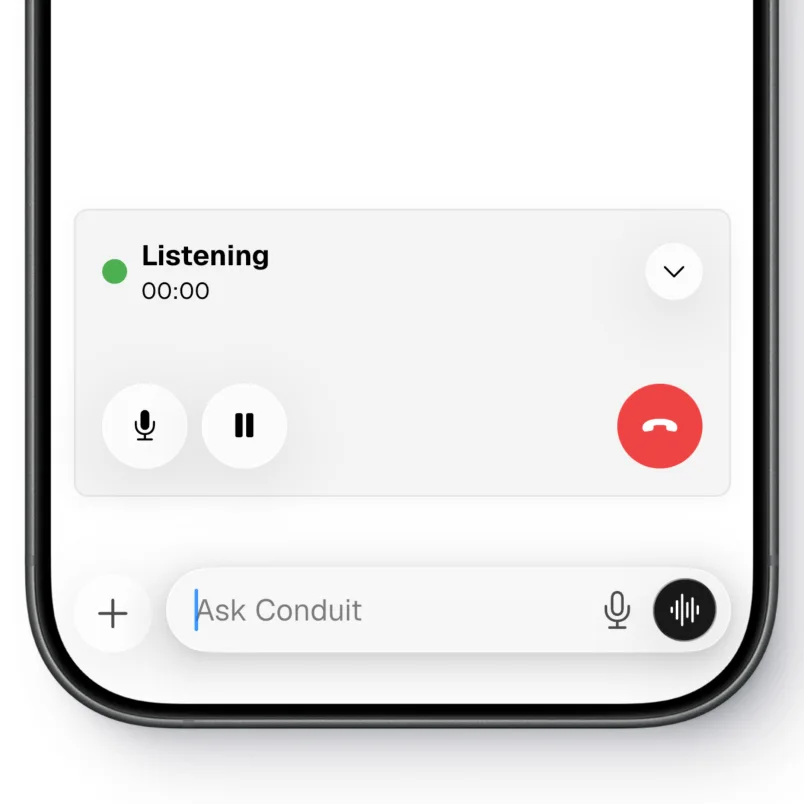
Hands-free conversations with live call controls.
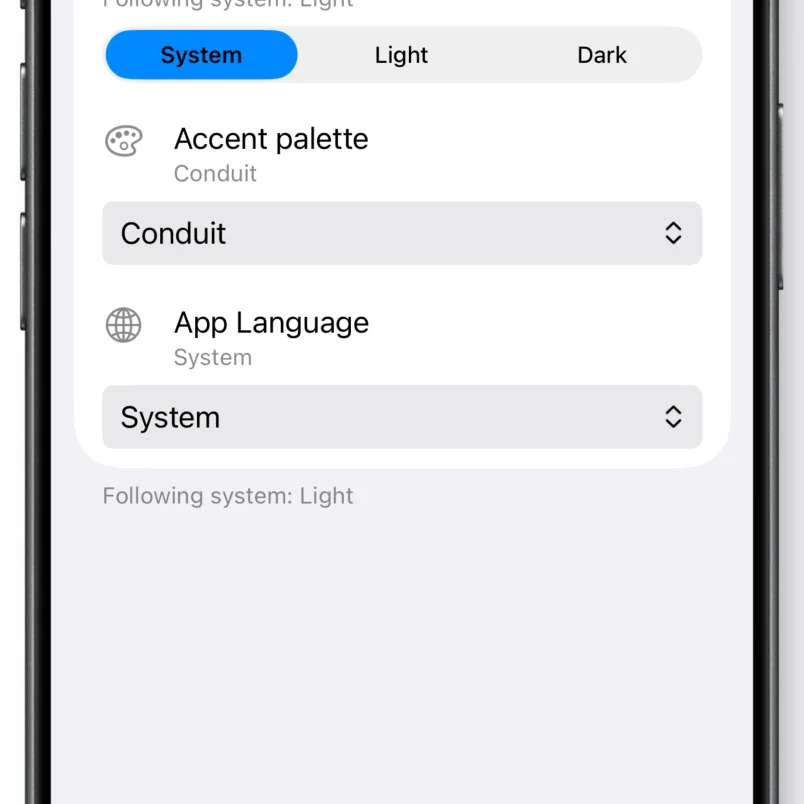
Choose an app language or follow your system settings.
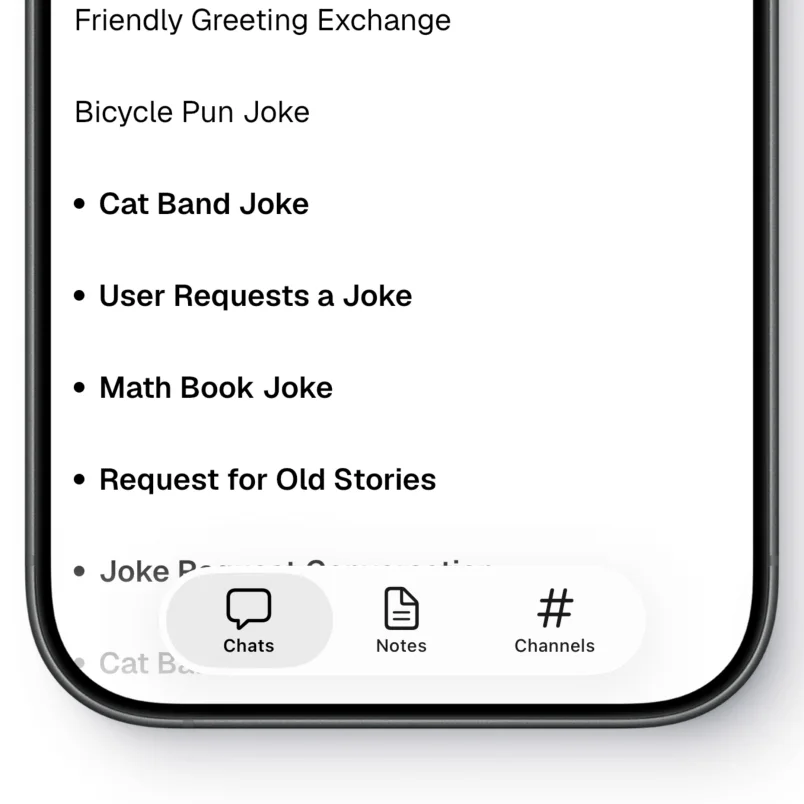
Material on Android, Cupertino on iOS, automatically.
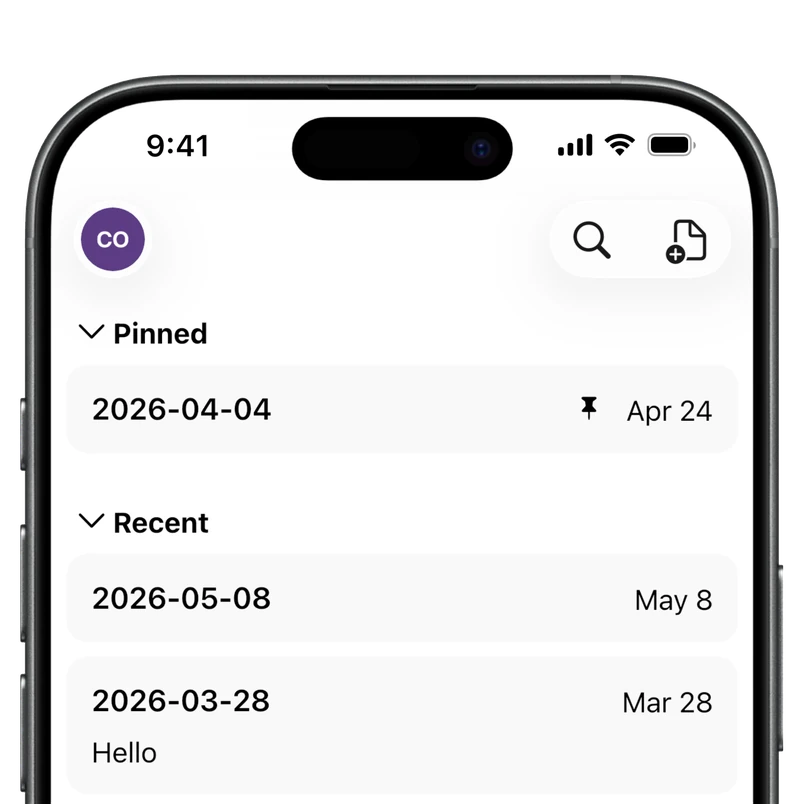
Chats, notes and drafts kept on your device.
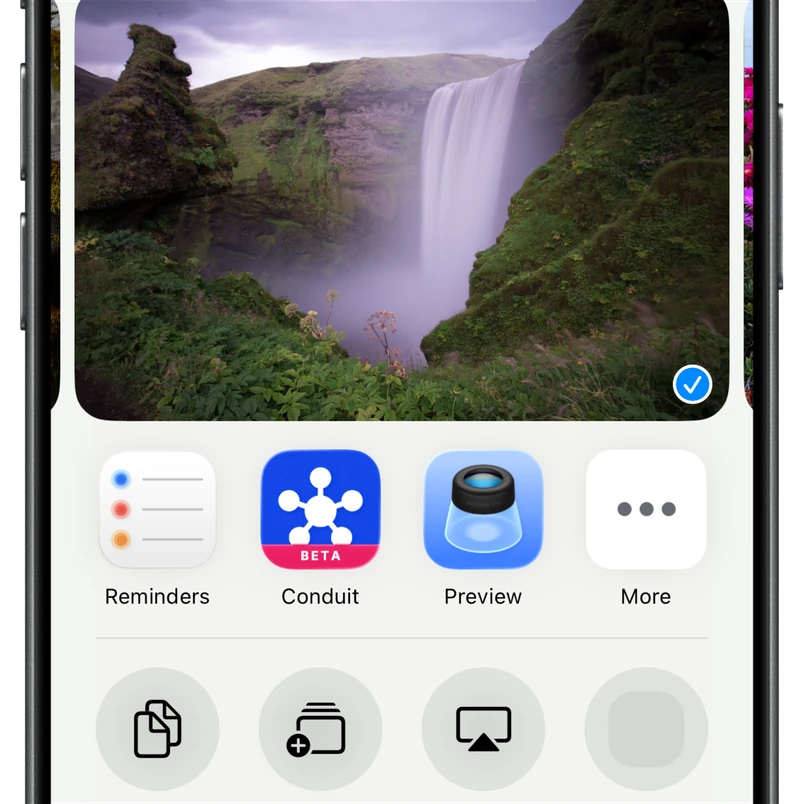
Send text, links and images straight into a prompt.
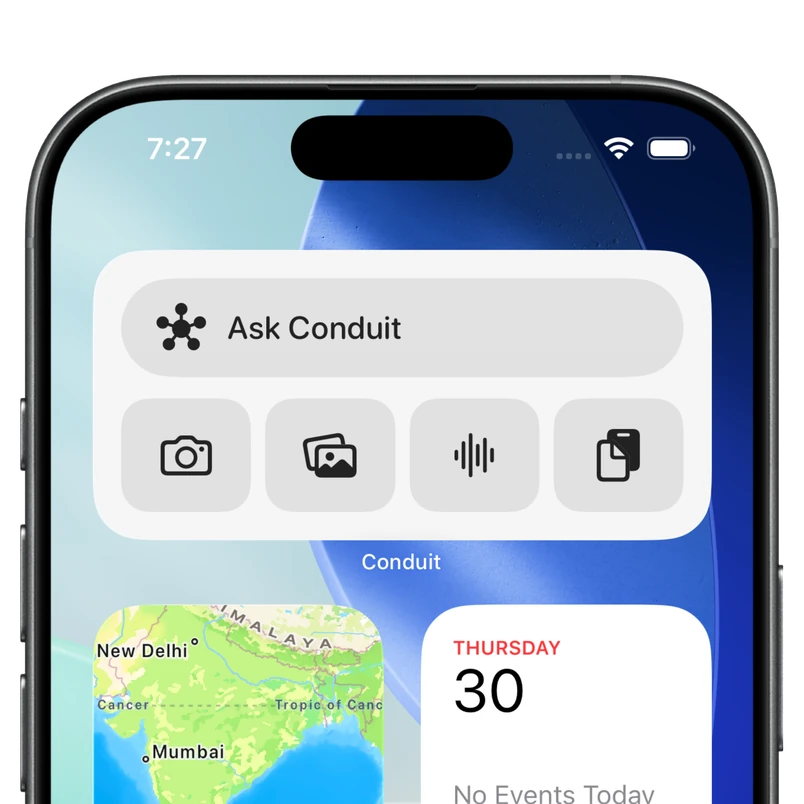
Widgets and quick actions for chat, mic and camera.
No. Conduit connects to an Open WebUI deployment you control, but it also talks directly to OpenAI-compatible APIs, Ollama, and OpenRouter, or to your own Hermes agent. Pick a backend on first launch and add the others whenever you like.
Any OpenAI-compatible endpoint using Chat Completions or Responses, including LM Studio and Azure-style deployments, plus native Ollama and first-party OpenRouter. Bring an API key, or skip it for a local endpoint that doesn't need one.
A self-hosted agent. Point Conduit at your Hermes server. Tool calls show as they run, sensitive steps ask for approval, and jobs can run on a schedule. Conduit only shows capabilities your server reports.
Username and password, LDAP, JWT, custom headers, SSO and OAuth providers, plus reverse-proxy login flows.
Yes, including oauth2-proxy, Authelia, Authentik, Pangolin and Cloudflare Tunnel. Conduit handles the cookies and session state on-device.
Chats, notes, and drafts stay on your device, including offline. Credentials live in iOS Keychain or Android Keystore via Flutter Secure Storage, never in plain-text local storage. Nothing is relayed through a backend the developer operates.
Yes. GPL-3.0, developed in the open on GitHub. No paid tiers, no premium gates.
Android 7.0+ (API 24) and iOS 16.0+. Built with Flutter on a Dart 3.9+ toolchain.
Open an issue or discussion on GitHub.
